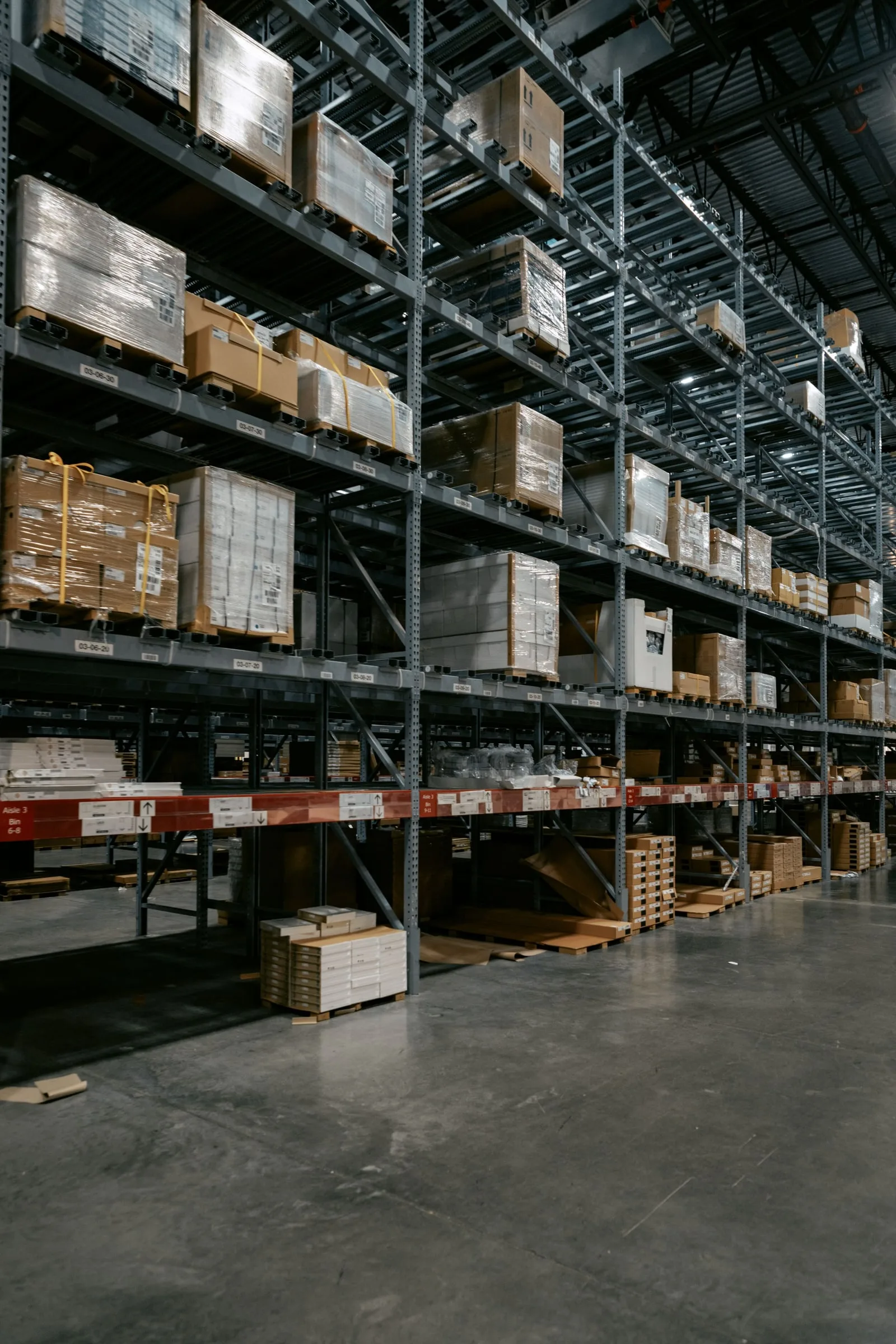
A rising water bill, a wet loading bay or drips above stored goods can put a warehouse under pressure. ADI investigates hidden water leaks across Buckinghamshire, including Milton Keynes, so you can plan the repair around your site.
For warehouses, distribution centres and industrial units. Surveys start with non-invasive tests, with access and any isolation agreed around the work on site.
Find the source before opening the floor
Water can travel along a roof member, below a slab or through an office ceiling before it becomes visible. The survey follows the evidence and separates leaking supplies from rainwater or drainage problems.
Buried mains and yard supplies
If the meter keeps moving when water use has stopped, the loss may be on the incoming main or a branch to another building. Acoustic listening, correlation and tracer gas help narrow the search beneath concrete and tarmac.
A drip above a pallet does not identify the roof defect. Moisture readings and thermal imaging help trace the route of the water; suitable roof tests are selected for the construction and available access. Findings go to your roofing contractor.
Leaks from toilets, showers or kitchen pipework can appear in an office below. Dye testing, moisture mapping and a small inspection camera help distinguish a fitting fault from a concealed supply leak.
Repeated top-ups deserve investigation. Testing individual circuits can establish which run is losing water before thermal imaging or tracer gas is used to locate the fault beneath floors or behind finished surfaces.
Where several machines or wash-down points share a supply, isolating each branch helps identify the affected pipe. Discuss shutdown windows and plant access with the office before the visit.
Standing water beside a dock may involve a drain, a downpipe or a leaking supply. Camera surveys and dye tests can follow the drainage route and investigate defects without assuming that every wet patch is a mains leak.
A useful survey starts with the people who know the building. Tell the office about forklift routes, delivery windows and any shared services so the engineer can plan access and testing.
1
Step 1: Explain the problem
Call with the postcode, meter readings and what you have noticed. Photographs and a record of when the water appears can help the office scope the work and quote.
2
Step 2: Arrange site access
Identify a site contact and any induction or permit requirements. Agree access to the meter, plant rooms, adjoining units and the affected part of the yard.
3
Step 3: Walk the site
Commercial work comes with a risk assessment and method statement. The engineer reviews the symptoms and the available pipe plans with your contact.
4
Step 4: Test and trace
Circuits are checked separately where possible. The engineer combines suitable detection methods and agrees any temporary water or heating isolation with the site.
5
Step 5: Record the findings
The report sets out the evidence, photographs and recommendations. Share it with your maintenance team, landlord or insurer when arranging the next step.
6
Step 6: Agree the repair
Pipework and drainage repairs can be quoted. Roof and building-fabric defects are located and reported for the appropriate contractor to repair.
ADI’s engineers combine these seven methods to locate hidden leaks before opening the affected area.
Tracer gas
A safe, non-flammable hydrogen and nitrogen mix is put into the pipe or void. It escapes at the leak, rises through the floor or wall, and a detector picks it up at the surface.
On a warehouse site: Supply pipes under yards and car parks, feeds under the slab, flat roofs.
Acoustic listening
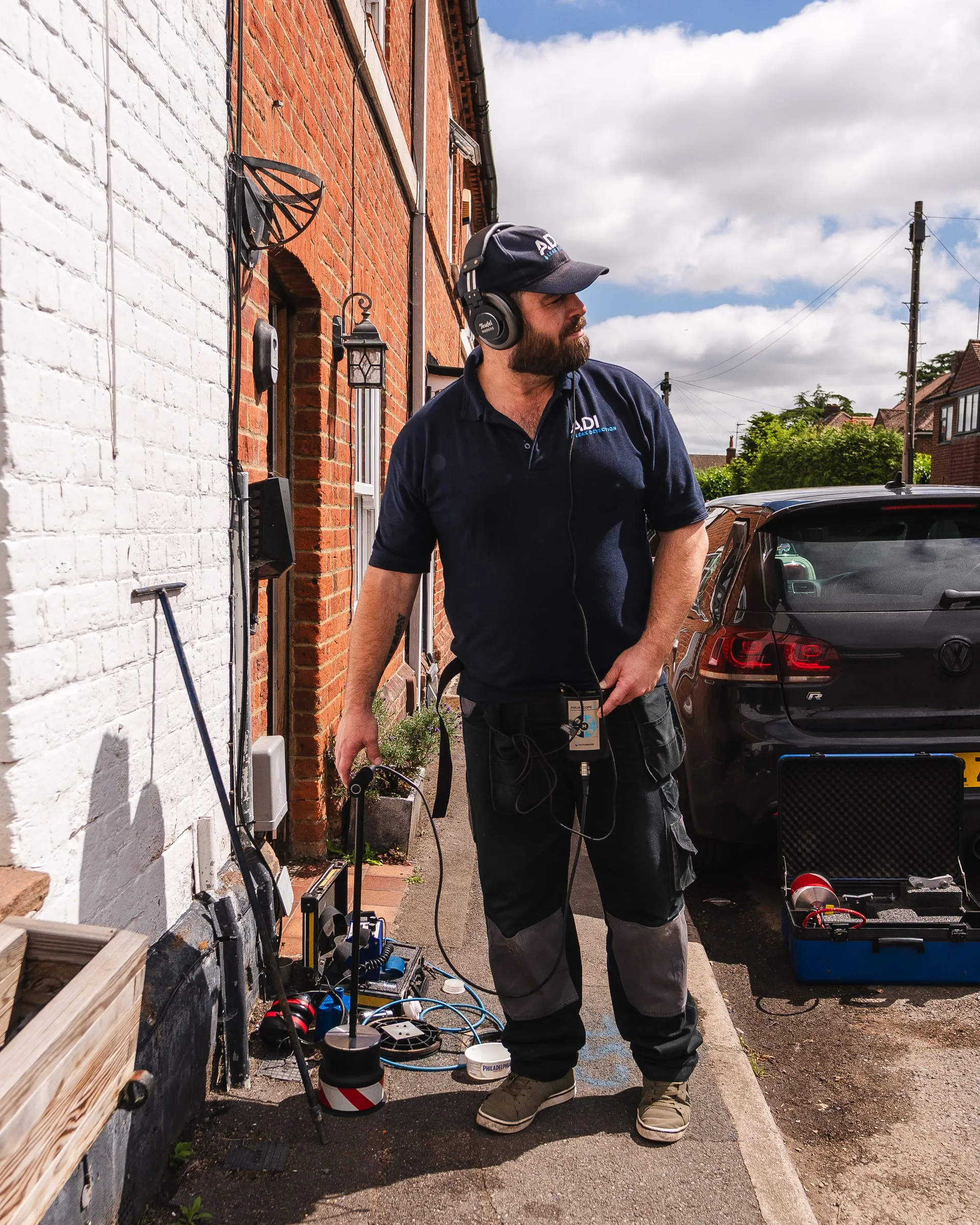
Ground and pipe microphones amplify the sound of water escaping under pressure. The loudest point is the leak.
On a warehouse site: Service yards, loading areas and walkways over buried pipework, ideally when the site is quiet.
Leak-noise correlation
Two sensors clamped to a pipe record the leak noise from either side; the correlator works out how far along the pipe the leak sits.
On a warehouse site: Long water mains across a site, where listening alone is slow.
Thermal imaging
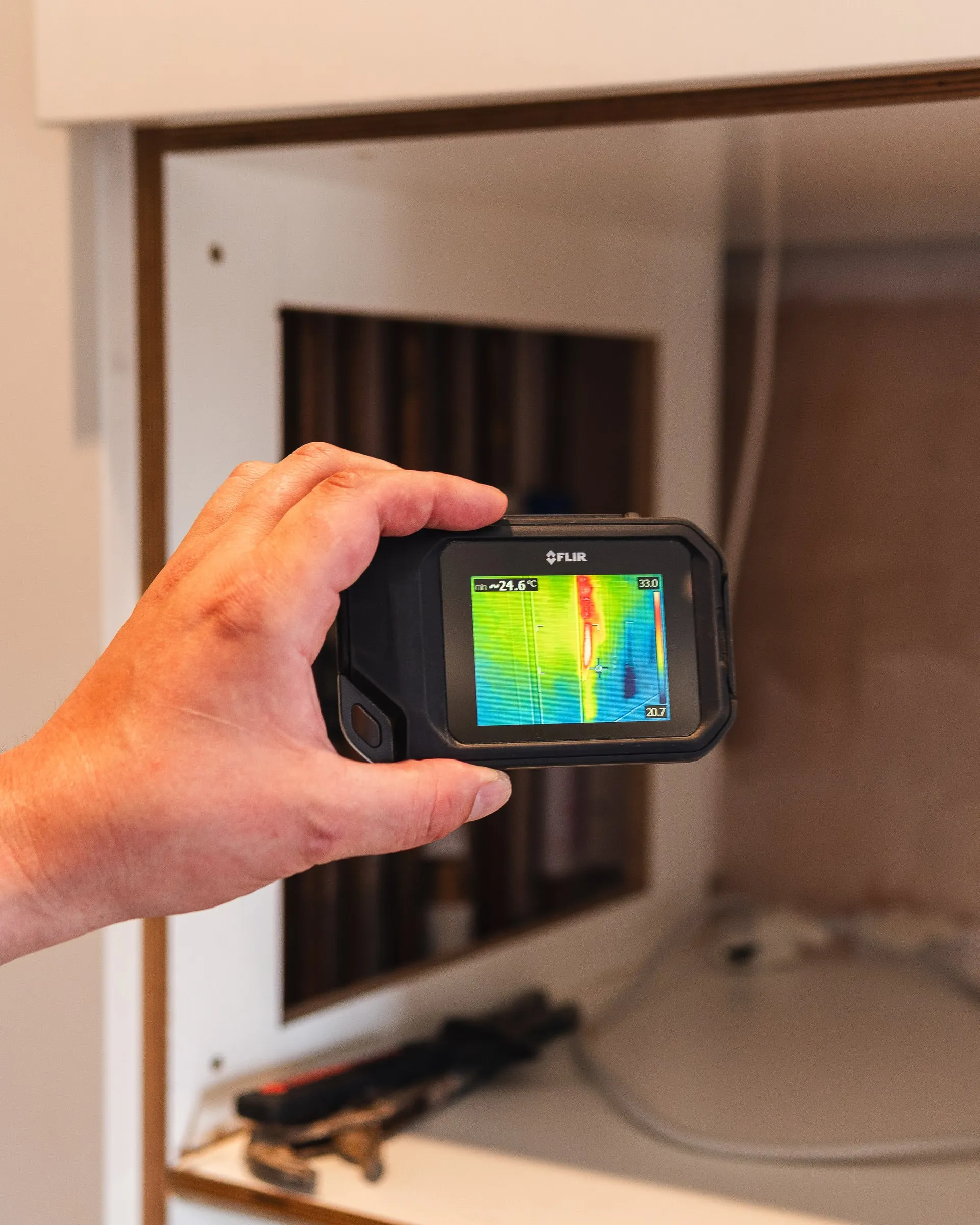
A thermal camera shows warm pipes and cold, wet patches behind finished surfaces. It scans large areas quickly and is always paired with another method to confirm.
On a warehouse site: Heating runs, hot feeds along the steelwork, and large roofs by drone.
Borescope cameras
A camera on a flexible tube goes through a small, easily made-good hole to look inside a void, a duct or a boxed-in pipe.
On a warehouse site: Ceiling voids in office blocks and boxed-in pipework in washrooms, before anything larger is opened.
Moisture mapping
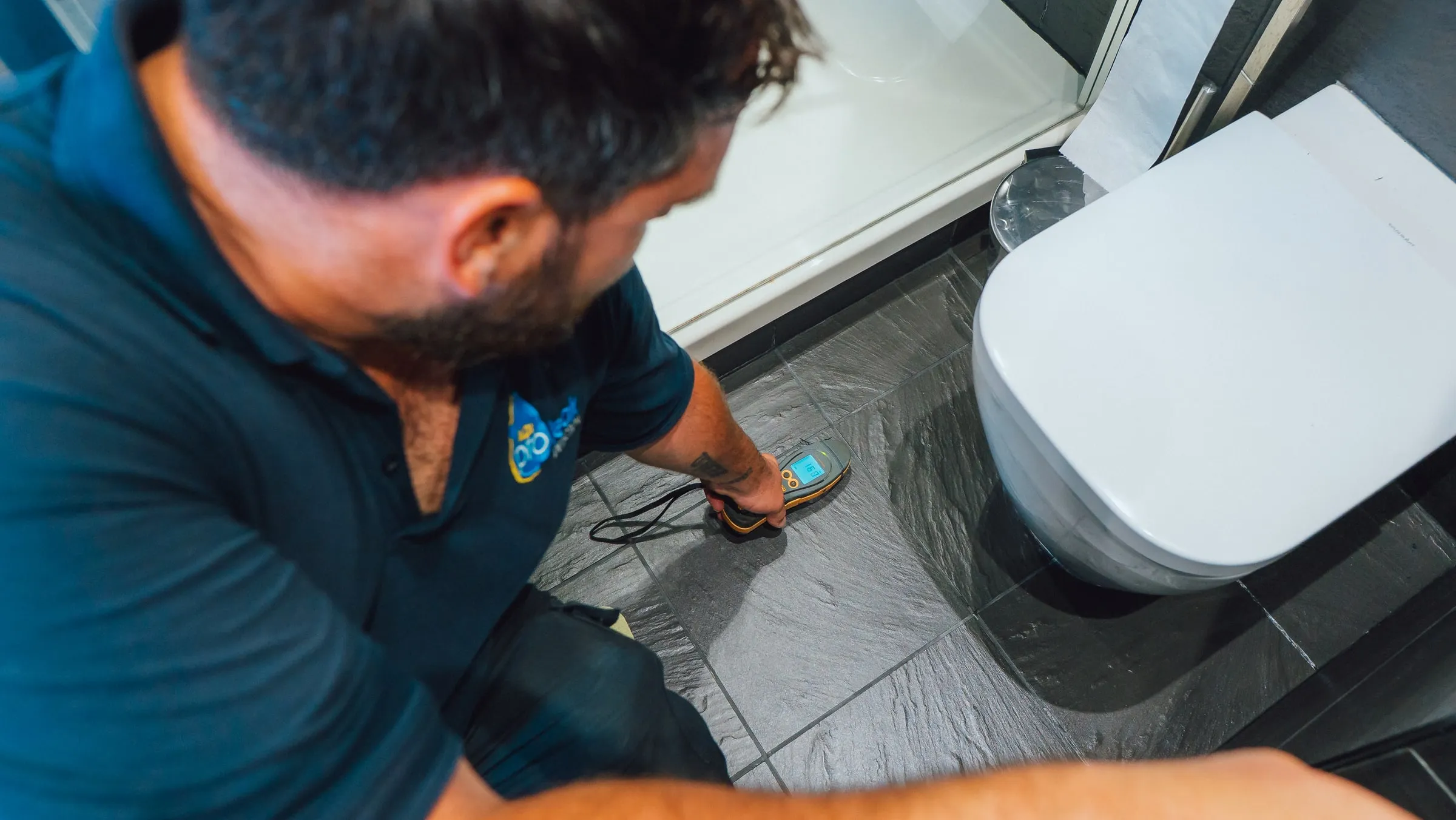
Pin and pinless meters read moisture in walls, floors and concrete. Plotted across the area, the readings show where the water has travelled and where it started.
On a warehouse site: Working out how far water has spread across a slab or up a blockwork wall.
Pressure testing
Each circuit is isolated and held under pressure. A drop confirms a leak on that circuit; a steady gauge rules it out, and proves a repair afterwards.
On a warehouse site: Sites with several feeds and circuits, and proving a repair before the area goes back into use.
Thermal imaging · Service cupboard
Moisture mapping · Washroom floor
Acoustic listening · Ground microphone
Areas we cover in Buckinghamshire
Amersham
Aylesbury
Beaconsfield
Bletchley
Buckingham
Chesham
Gerrards Cross
High Wycombe
Marlow
Milton Keynes
Newport Pagnell
Olney
Taplow
Winslow
A survey planned around your building
The building’s use affects how a survey is organised. These are the kinds of premises and access issues to discuss, wherever your site is in the county.
Warehouses and distribution centres
Racking can restrict access to a wet part of the floor. Explain which aisles can be reached safely, where goods need protection and when vehicle movements affect the survey area.
Factories and workshops
Water feeds, wash-down points and heating circuits can pass through several work areas. A maintenance contact who knows the isolation points helps the engineer agree the order of testing.
Multi-let industrial buildings
Shared meters and pipework may mean access is needed beyond the unit where damp first appears. Involve the landlord or managing agent early and gather any drawings showing the shared supply.
Commercial leak detection specialists, provided by ADI Leak Detection
Warehouse Leak Detection, a specialist service from ADI Leak Detection. ADI started in 2011 and has more than twenty-five leak investigation engineers across England, Scotland and Wales. Operators with sites up and down the country can use one provider and one report format for all of them.
£5 million public liability insurance. A risk assessment and method statement come with every commercial job.
Accredited by CIPHE, WIAPS and WaterSafe for plumbing and water regulations, and a SPATA-approved contractor for pool work.
Reports written for insurers, with photographs, findings and recommendations.
4.7 on Trustpilot from 1600+ reviews, checked 14 September 2026.
Do you cover Milton Keynes as well as the rest of Buckinghamshire?
Yes. This page covers ceremonial Buckinghamshire, including Milton Keynes, Bletchley, Newport Pagnell and Olney. We also cover smaller settlements and sites between the towns listed. Give the office your full postcode and site details to discuss the survey and current availability.
Can the warehouse keep operating during the investigation?
Surveys are planned around site access and activity, but some tests need a temporary water or heating isolation and a safe working area. Explain your delivery schedule, forklift routes and any process that depends on the supply. The engineer will agree the testing arrangements with your site contact.
Can you investigate a leak under a concrete warehouse floor?
Yes. Acoustic listening, tracer gas, pressure testing and thermal imaging can help locate concealed leaks before an area is opened. The methods depend on the pipe material, depth, access and conditions on site. Any excavation or repair is discussed and quoted as appropriate.
What should we prepare if the water supply serves several units?
Gather any pipe drawings and recent meter readings, identify the stopcocks and arrange access to the relevant units. Tell the office which supplies are shared and who can authorise an isolation. The report records the investigation findings; ownership and lease responsibilities should be checked with your landlord or managing agent.
Will the report help our landlord or insurer arrange repairs?
ADI supplies findings, photographs and recommendations that can be shared with a landlord, insurer or repair contractor. Insurance cover depends on your policy and the insurer’s decision. The survey does not guarantee that a claim will be accepted.
Do you repair warehouse roofs as well as finding the leak?
ADI investigates roof and building-fabric leaks and reports the findings for your roofing contractor. Roof repairs are not part of this service. Pipework and drainage repairs can be quoted separately where appropriate.
How much will a Buckinghamshire warehouse survey cost?
The quote depends on the suspected leak, site size, access and equipment needed. Call with the postcode and a description of the problem so the office can scope the work and confirm availability. There is no fixed county-wide price or promised arrival time.
Discuss your Buckinghamshire warehouse
Have the site postcode, recent meter readings and a description of the problem ready. ADI’s office team will discuss access, current availability and a quote for the investigation.